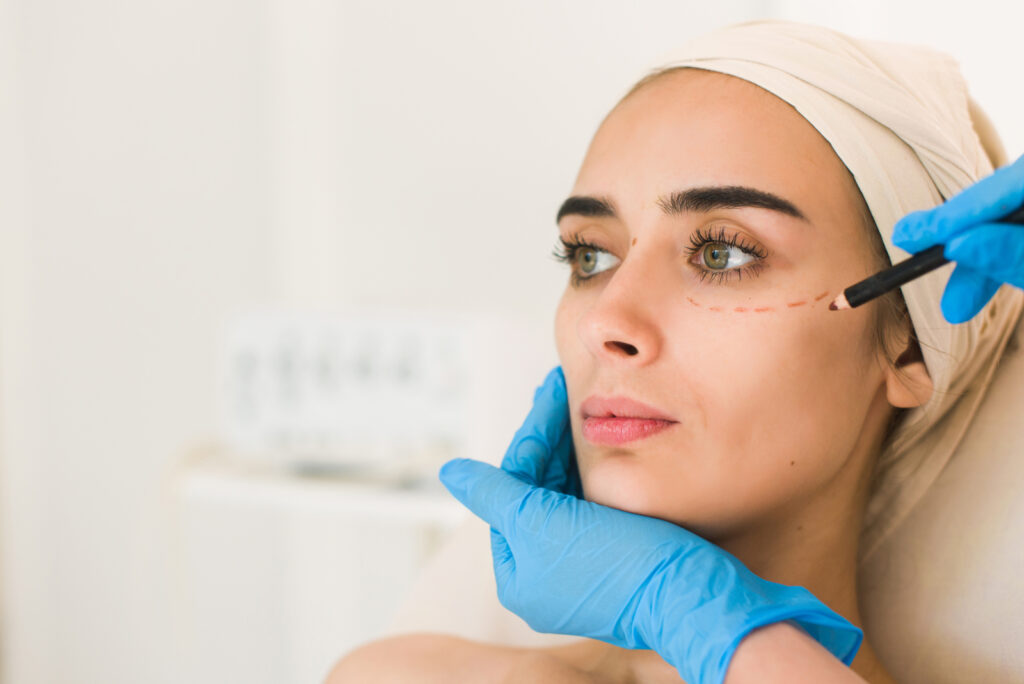
What Happens During the Blepharoplasty Procedure?
During eyelid surgery, fine incisions are made within the natural creases and folds of the eyelids, where any scarring can be kept discreet. Through these, excess skin, muscle or fat is carefully removed or repositioned to refresh the area. Upper and lower eyelids treated together usually take around an hour and a half, while a single area often takes less than an hour. The approach is planned around your eyes at your consultation.
Does the Blepharoplasty Procedure Hurt?
Eyelid surgery is generally carried out under sedation, sometimes described as twilight sleep, along with local anaesthetic to numb the eyelids, so you should not feel pain during the procedure. Some tenderness afterwards is normal and is managed with the aftercare advice you are given.
Side Effects and Downtime
Swelling and bruising around the eyes are normal in the first week or so, and some people notice temporarily blurred or reduced vision early on, which settles. For upper eyelids, sutures are usually removed within about five to seven days. Most people take around a week of downtime, and strenuous activity is best avoided for about a month.
Am I a Suitable Candidate?
Eyelid surgery may suit you if you have excess upper-eyelid skin, under-eye bags, or eyes that look tired despite feeling well-rested, and you are in good general health with realistic expectations. Some eyelid changes can have medical causes, so part of the assessment is checking that surgery is the right approach for you. This is discussed at your consultation.
Risks and Things to Consider
Blepharoplasty is surgery and carries risks that should be understood. These can include bleeding, infection, scarring, dry or irritated eyes, difficulty fully closing the eyes, changes in vision, asymmetry, and the possibility that the result does not fully meet your expectations or that further surgery is needed. Because this surgery is around the eyes, these risks are discussed carefully at your consultation. This information is general and is not a substitute for individual medical advice.
Results
As the swelling settles over the weeks and months following surgery, the eyes generally look less tired and more refreshed. Results are long-lasting, though the eyes continue to age naturally over time, and outcomes vary from person to person.