
NOW ACCEPTING NEW PATIENTS – BOOK A CONSULTATION
Non-surgical skin tightening at Verve Cosmetic Clinic. Speak with our team about firming the face, neck and body.
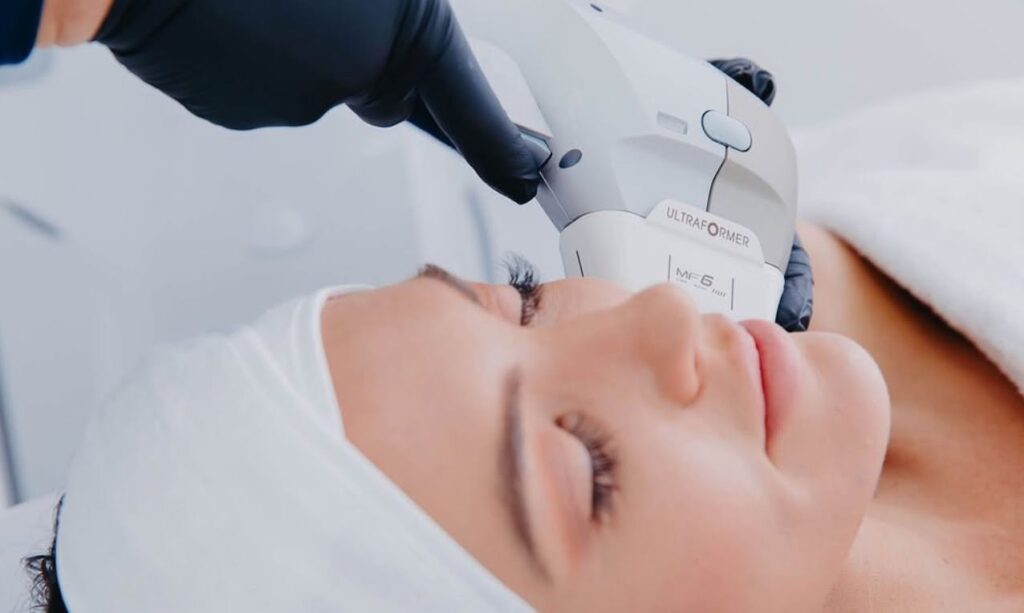
HIFU stands for high-intensity focused ultrasound. It delivers ultrasound energy to set depths beneath the surface of the skin, where the heat prompts the tissue to contract and to produce new collagen over the following months. The surface of the skin is not broken.
It is used to firm and lift mild to moderate laxity on the face, under the chin, on the neck and on the body. It works gradually, and it is not a substitute for surgery where there is significant sagging.
HIFU is used at Verve for:
The handpiece focuses ultrasound energy at a fixed depth below the surface, in the same layers a surgeon addresses in a facelift. At that depth the energy creates small, controlled points of heating. The tissue contracts in response and the body lays down collagen around those points over the following weeks and months. Because the energy is focused below the surface, the outer skin is left intact.
Different depths are used for different areas, and the settings are chosen for the area being treated and for what is being addressed.
Your skin is assessed and the treatment areas are mapped. Ultrasound gel is applied and the handpiece delivers energy in lines across the area. You will feel heat and small prickling or deep aching sensations as the energy is delivered, and this is more noticeable over bony areas such as the jaw. A full face and neck treatment takes around 60 to 90 minutes. Some people take pain relief beforehand, which your doctor can discuss with you.
Any tightening develops gradually as collagen forms, generally becoming apparent from around two months and continuing to around six months after treatment. Most areas are treated in a single session, with a repeat considered after twelve to eighteen months depending on how you respond. Some people see a clear change and others see very little, and the degree of laxity you start with makes a substantial difference.
HIFU delivers heat below the skin and carries risks that should be understood. Discomfort during treatment is normal and some people find it painful. Afterwards you may have redness, swelling, tenderness to touch, and sometimes small welts or bruising, generally settling over days. Temporary numbness or tingling in the treated area can occur and usually resolves over weeks.
Less commonly, and usually where energy is delivered at the wrong depth or setting, there can be burns or blistering, longer-lasting nerve irritation causing numbness or muscle weakness, and loss of fat in the treated area, which can leave a hollow that may not fully recover. This is why the assessment, the depth chosen and the operator matter.
HIFU is not appropriate over active skin infection or inflammation, over metal implants or fillers in the treatment path in some cases, during pregnancy, or where you have certain medical conditions. The risks that apply to you are discussed at your consultation. This information is general and is not a substitute for individual medical advice.
No. A facelift removes and repositions tissue surgically. HIFU tightens existing tissue and produces a milder change. Where there is significant sagging, HIFU will not achieve a surgical result.
There is heat and a deep prickling or aching sensation as the energy is delivered, and it is more intense over bone. Some people find it uncomfortable and others find it painful. Pain relief beforehand can be discussed.
From around two months, continuing to about six months as collagen forms. There is little to see immediately.
Most areas are treated once, with a repeat considered after twelve to eighteen months depending on your response.
A considered approach to aesthetics begins with expert guidance.
Meet with Dr Alia Nasser and our experienced team for a comprehensive consultation, where we take the time to understand your goals, assess your concerns and create a bespoke treatment plan.